Pulling into the gravel driveway at Lafleur, the first sight that greets you is not a grand château or expansive winery. Instead, it is a simple farmhouse, a modest winemaking operation, and 4.5 hectares of immaculately tended, garden-like vines. It perfectly reflects the ethos of Lafleur and the Guinaudeau family, where the vineyard is prioritized above all else. All 24 people who work at the estate walk these vines daily — they are all vignerons — and that intimacy with the land has made them confident and bold enough to test new processes and forge uncharted territory.
In 2025, Lafleur made the decision to leave the Pomerol, Bordeaux Supérieur, and Bordeaux appellations and classify all of its wines as Vin de France. The move was many years in the making. Decades of detailed climate and soil research led the Guinaudeau family to an unavoidable conclusion: annual temperatures were rising, and viticultural practices would eventually have to evolve, even if that meant moving beyond the constraints of the appellation system.
The estate has experimented widely, trialing reduced canopy height to lower transpiration, adding hay mulch to preserve soil moisture, and implementing netting to shade the vines. However, the defining subject surrounding the 2025 vintage was the realization that even water reserves fully replenished by winter rains would eventually become insufficient to sustain the vines through increasingly hot and dry growing seasons.
Years spent exploring methods to carefully recharge the soils with managed irrigation had prepared the estate for this moment. When extreme heat and drought arrived in June 2025, the path forward became clear. In order to preserve both the health of the vines and the identity of Lafleur itself, the team recharged the soils in Pomerol during the summer of 2025. As with every adjustment made at the estate, the approach was deliberate and deeply considered, from the source of the water to the timing and method of its distribution. The water itself was drawn from privately owned natural aquifers rather than treated public sources. Rather than irrigating the vines directly through drip systems, the team manually opened sections of soil, added water, and then closed the soils again. This was carried out across different rows and at varying distances from the vines in order to mirror the inconsistency of nature itself. The goal was not to feed the vines directly, but to restore moisture to the soils and mimic the function of the water table, allowing the vineyard ecosystem to regulate the distribution of resources naturally through the living network of soils and vine roots.
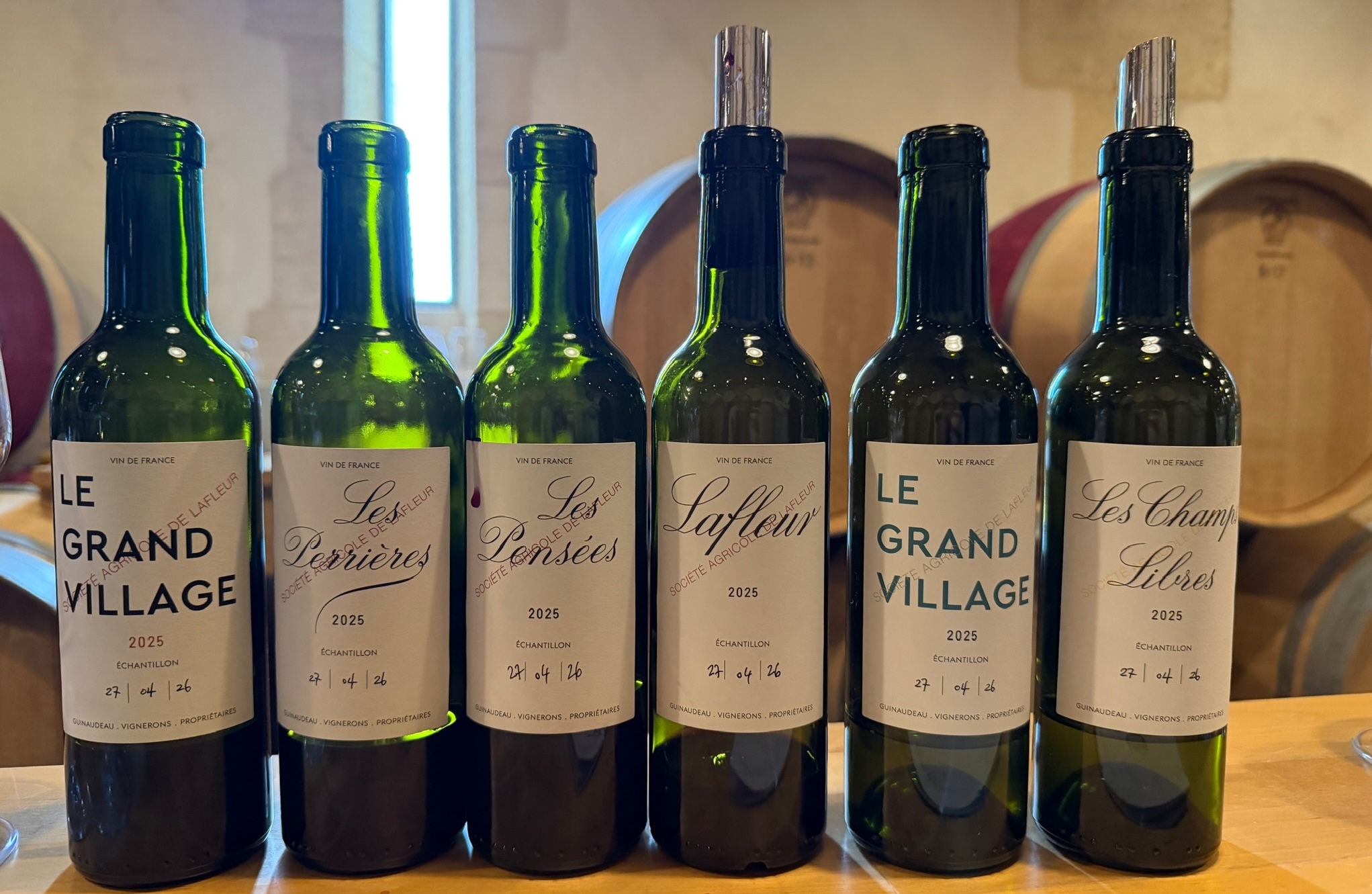
Tasting the young 2025s on the final day of En Primeur in April, it was clear they are on the right path. The wines retain the complexity, refinement, and unmistakable character for which Lafleur is known. The Guinaudeau family’s bold decisions are inseparable from their role as steadfast guardians of the estate’s identity. Their deep understanding of the past allows them to approach the future with open eyes. In a sense, they are making changes in order to stay the same.
We are very excited to offer this historic 2025 vintage:
The grand vin, Lafleur, unfolds slowly in the glass, moving from concentrated red berry fruit to dried flowers, all carried by the signature coiled energy that defines the wine. With time in the glass, smoky depth emerges alongside increasingly complex floral notes.
Le Pensée 2025 fills the mouth with opulent dark fruit and generous texture, supported by seamless tannic structure.
Les Perrières shows fresh, lifted fruit wrapped in bright mineral structure. Silky tannins and balanced acidity make it remarkably approachable even at this young stage.
Le Grand Village Rouge offers concentrated blue fruit framed by black pepper and subtle savory spice — serious in structure, yet immediately pleasurable.
Le Grand Village Blanc fills the mouth with a fleshy core of yellow fruit, lifted by mouth-watering acidity and persistent freshness.
Les Champs Libres balances creamy lees character with zippy, chalky structure and a gently toasty finish.
All of the wines carry the unmistakable Lafleur character, defined by elegance, refinement, and complexity.